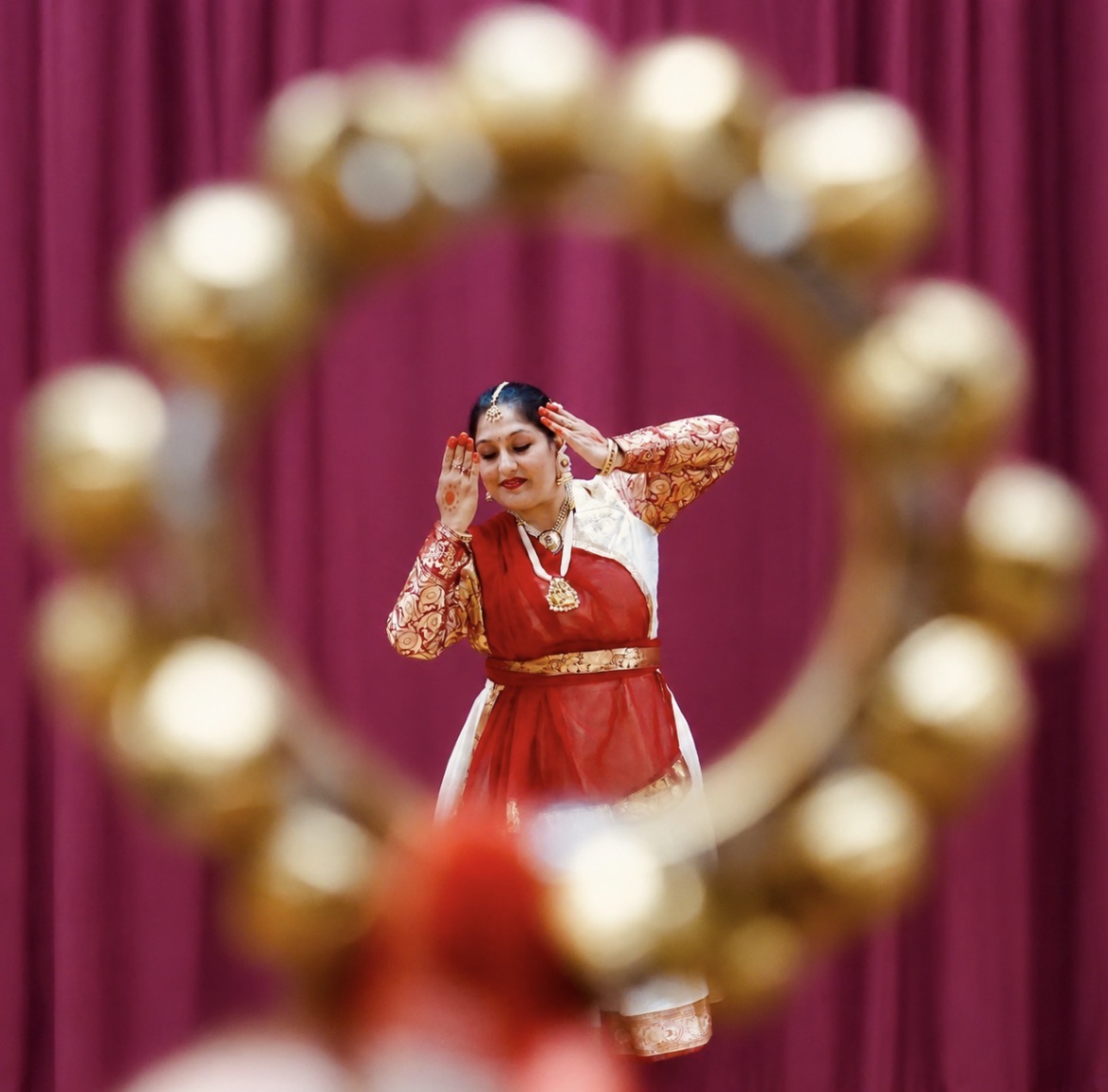
Kathak translates to “storyteller.” Through this classical art form, your child will learn to tell stories using graceful hand gestures, expressive facial movements, and dynamic footwork. Beyond just physical movement, it is a beautiful, engaging way for children to connect with Indian culture, history, and mythology while building coordination and focus.
No prior experience is necessary! While ages 5 to 7 is a wonderful window to begin building rhythm and muscle memory, children (and teens) of any age can start learning. Beginners always start with the absolute fundamentals—such as posture, basic hand movements (Mudras), and foundational foot stamps (Tatkar)—in a supportive, step-by-step environment.
Ghungroos are essential to Kathak, acting as a musical instrument that amplifies a dancer’s footwork. However, beginners do not start with heavy bells. Young students usually begin without them or with very light sets, gradually increasing the weight as their leg strength and rhythmic control develop over time.
Unlike ballet or southern Indian classical styles (which often use a deep bent-knee stance), Kathak is primarily danced with straight legs. This upright posture allows for Kathak’s signature lightning-fast spins (chakkars) and incredibly complex rhythmic footwork. It is a highly mathematical and rhythmic dance, often feeling as though the dancer is playing a percussion instrument with their feet.
Kathak has three main traditional schools: Lucknow (known for grace and acting), Jaipur (famous for fast spins and powerful footwork), and Benares (known for rhythmic heel work). Most beginner curriculums start with a strong foundational mix of these techniques. This ensures your child builds well-rounded skills in rhythm, speed, and grace before specializing in a specific Gharana as they advance through the Natraj Performing Arts curriculum.